dm dialogicum Karlsruhe
Refurbishment and redesign of an office space, as a pilot project — Am dm-Platz 1, Karlsruhe, Germany — 805 m² — April 2026 — dm-drogerie markt GmbH & Co. KG
A Pilot Space for the Future of Work
For dm-drogerie markt’s “dialogicum,” blocher partners is developing a work environment that physically supports change. A flexible spatial layout combines opportunities for interaction, concentration, and privacy, laying the foundation for a work environment that can continuously evolve.
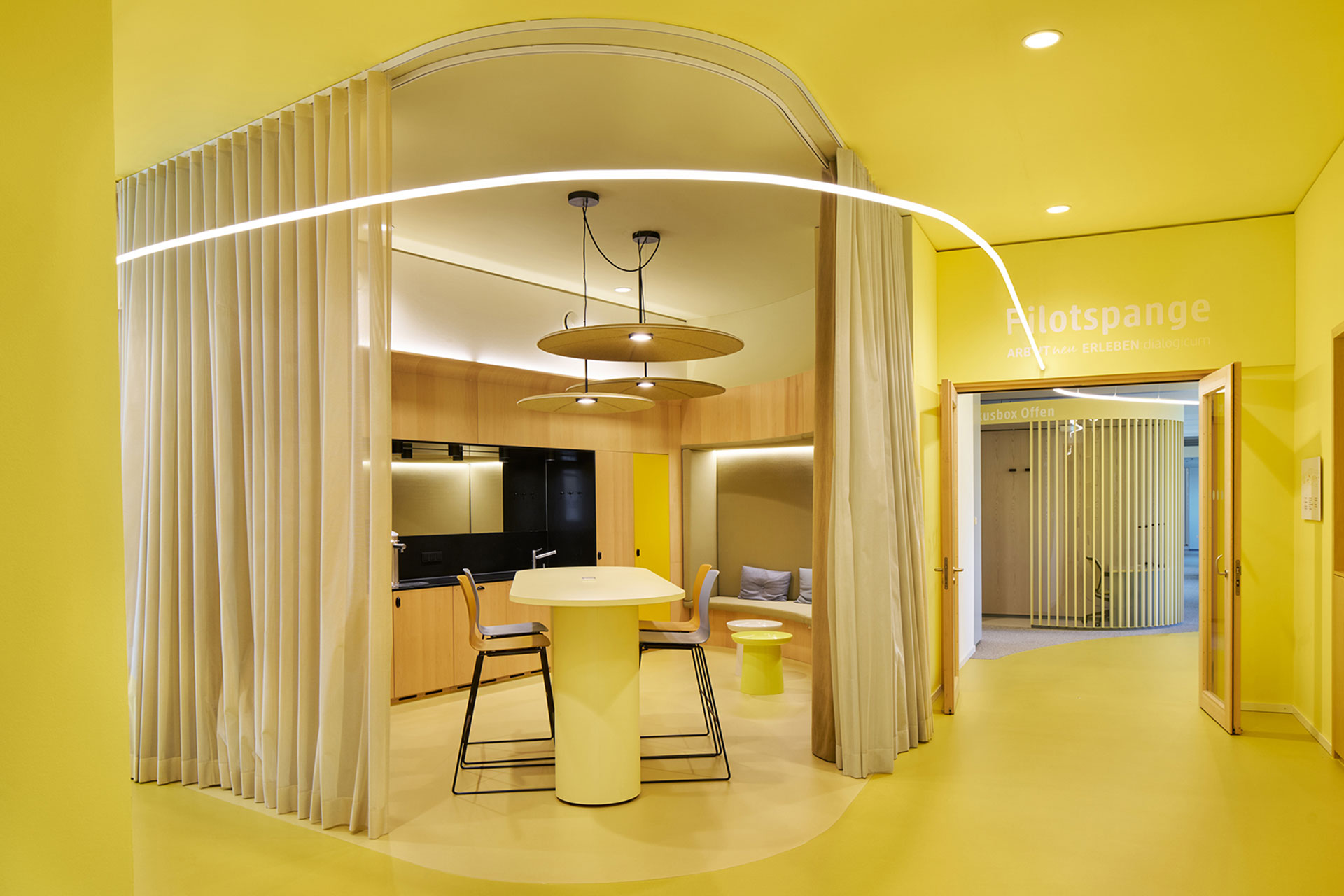
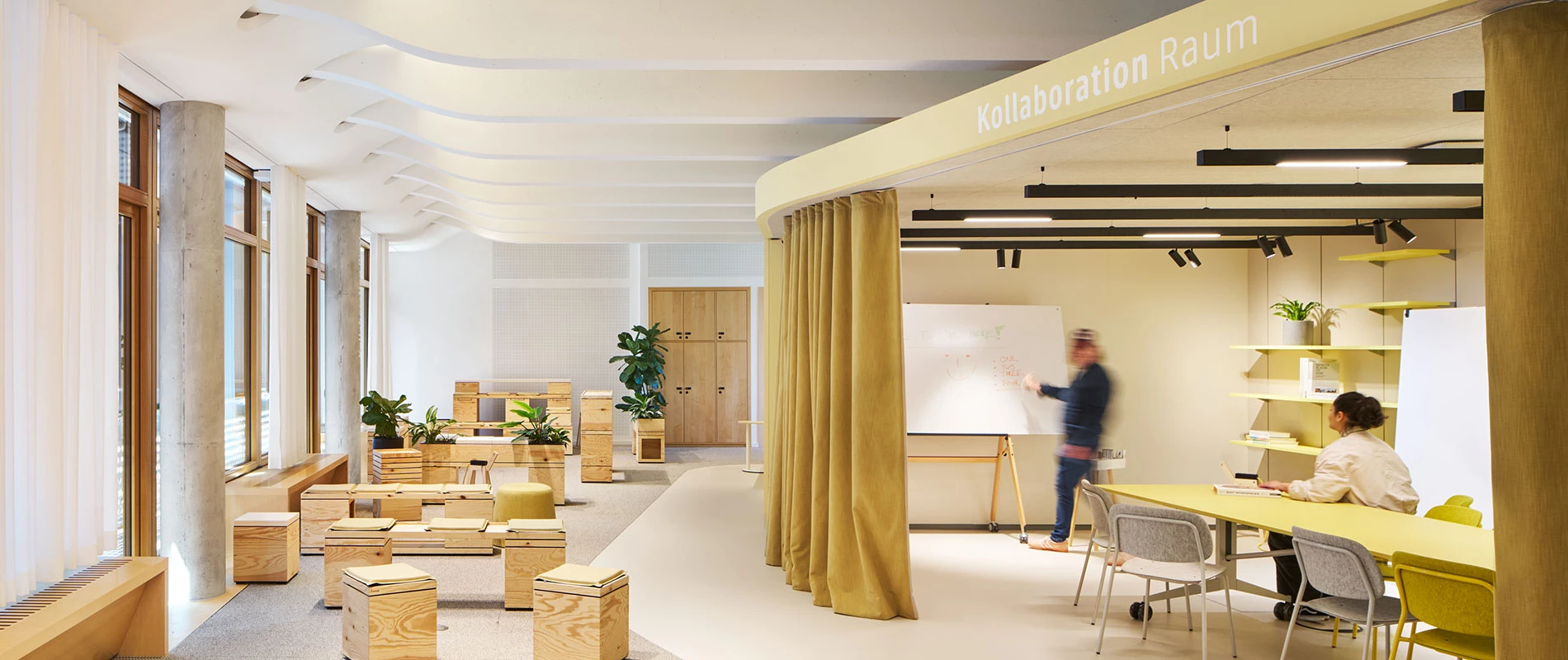
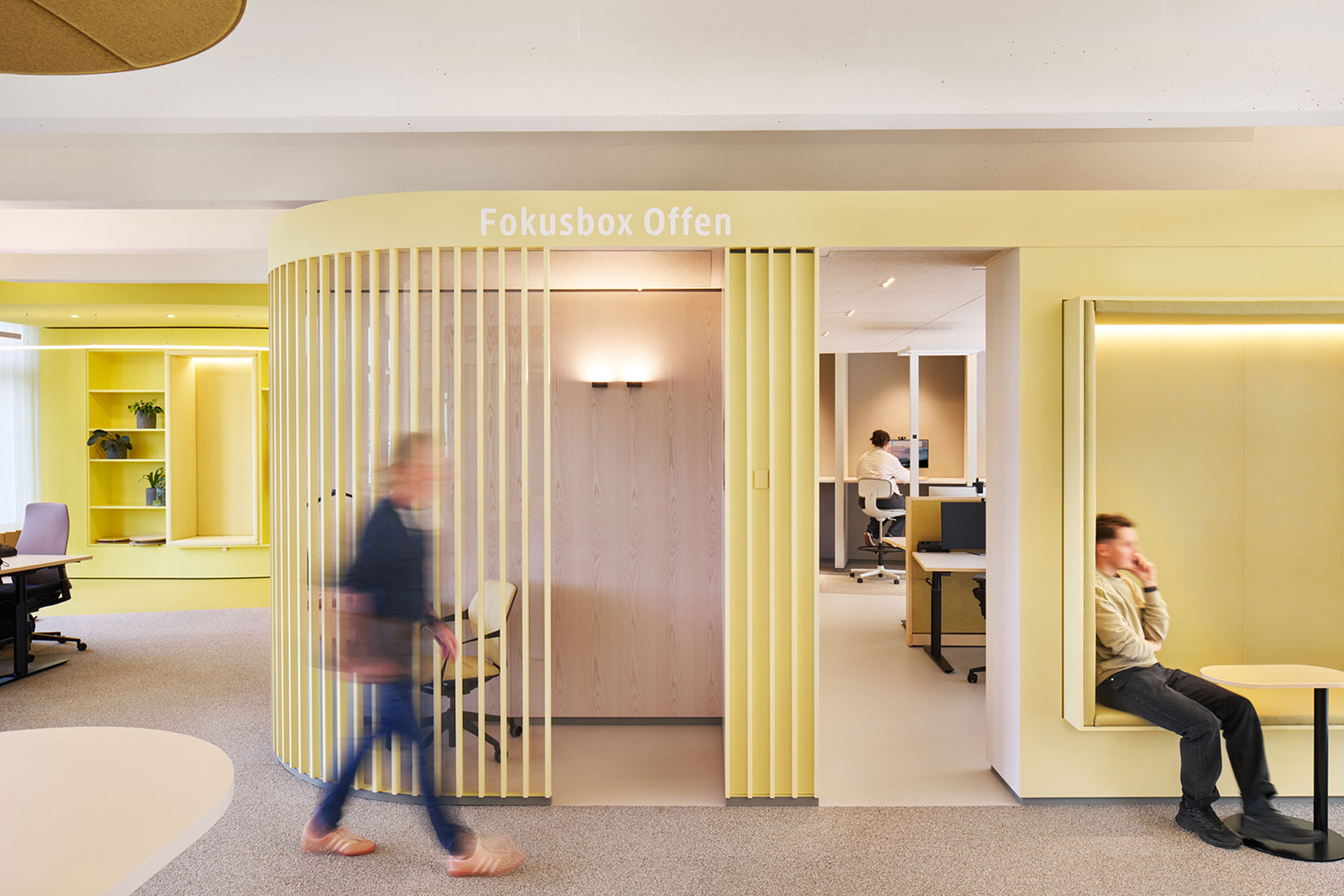
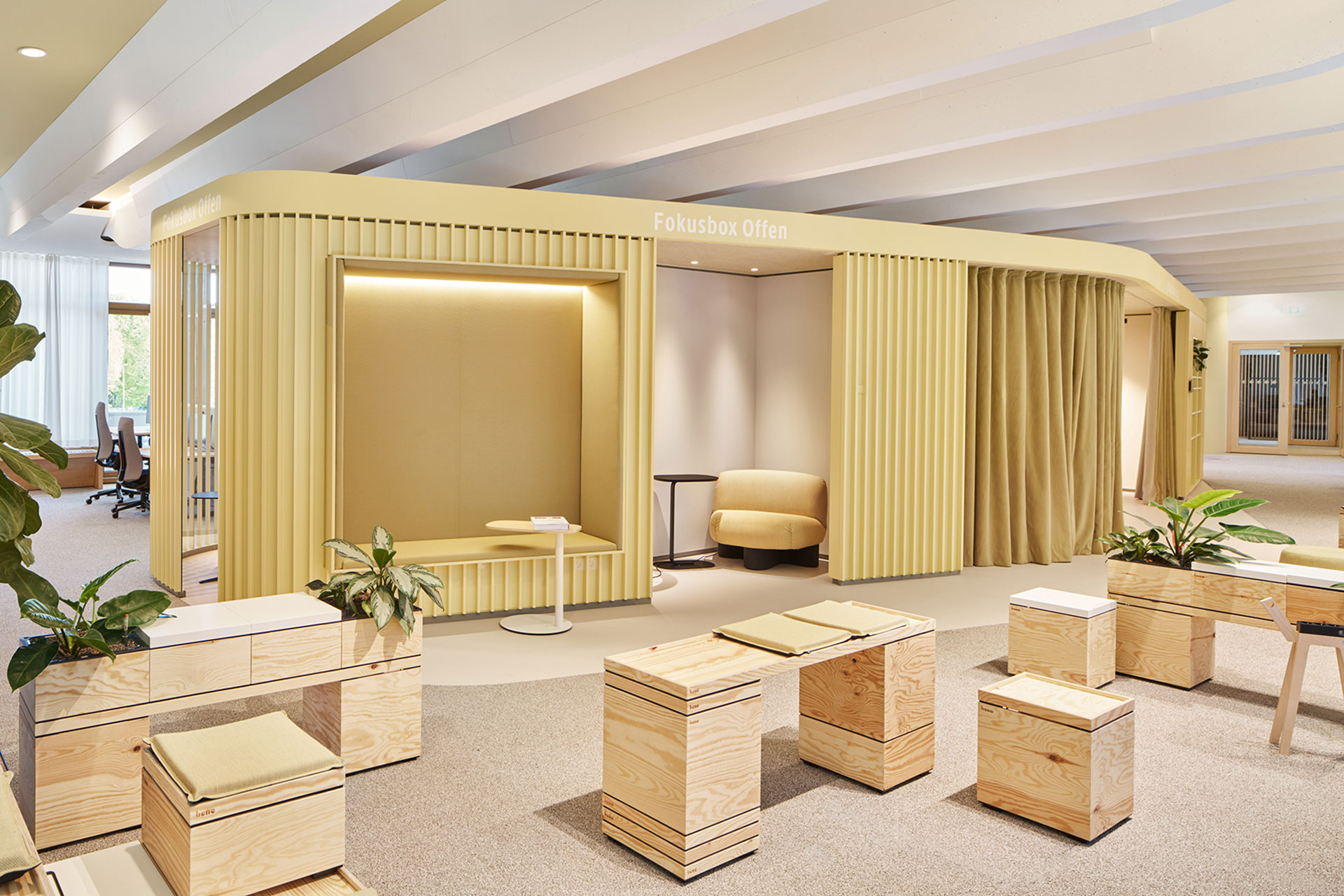
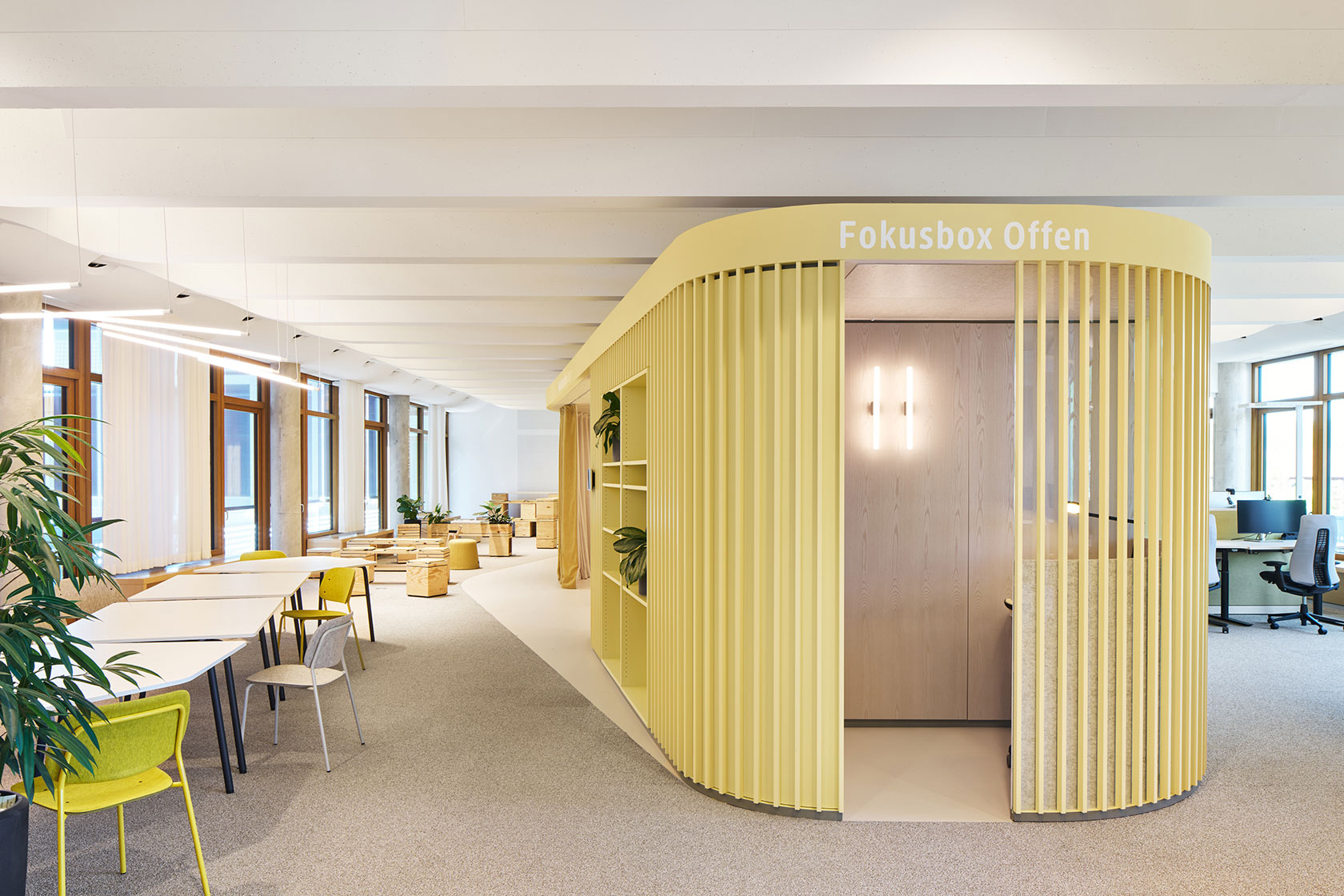
The project takes as its starting point an existing office space of around 800 square metres. Organically shaped ‘room-within-a-room’ modules structure the open-plan layout and create a varied sequence of workspaces. Areas for concentrated work alternate with meeting rooms, open meeting spaces and quiet zones. The fitted elements divide the space into zones, improve the acoustic conditions and allow for a high degree of flexibility without compromising the open character of the space.
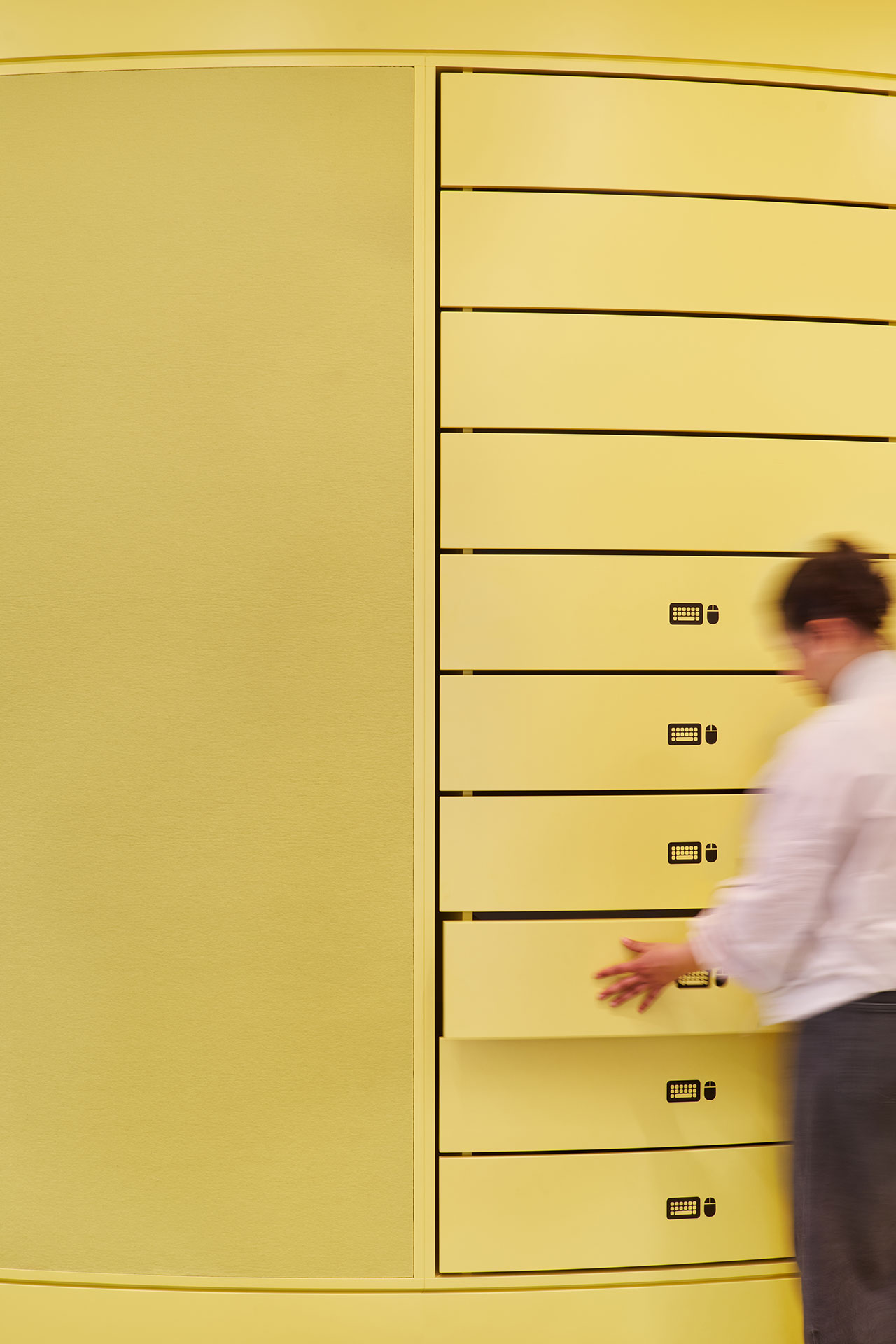
A multifunctional spatial feature forms the communicative centrepiece of the design. It combines storage space, seating and analogue information displays, and is complemented by a newly designed kitchenette. This creates spaces that facilitate both spontaneous encounters and planned collaboration. The spatial layout responds to different working styles and usage scenarios without prescribing rigid functions. Openness is not only experienced spatially but also remains possible from an organisational perspective.
Materiality as an expression of corporate culture
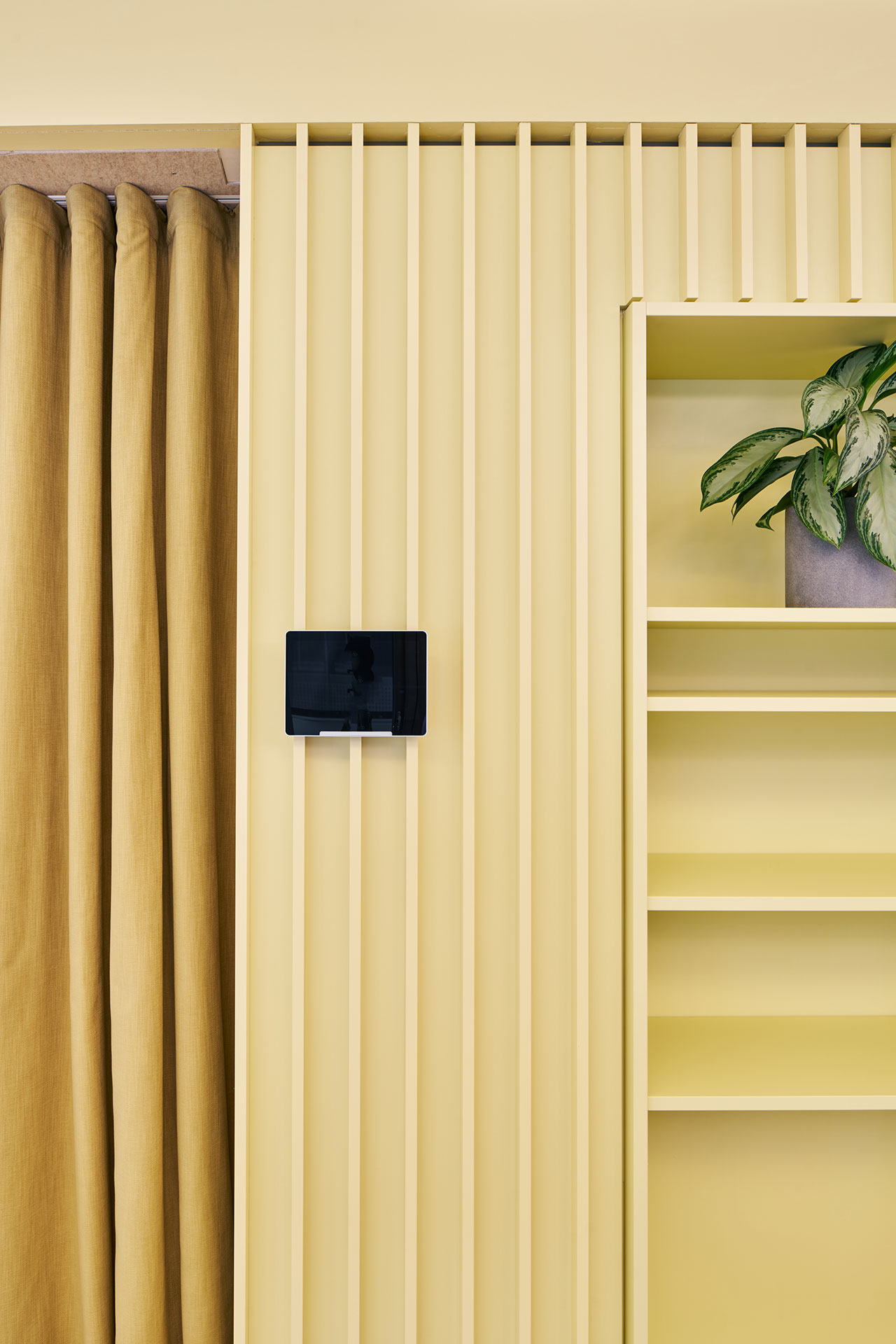
Materiality and colour translate dm’s identity into a contemporary working environment. Shades of yellow appear in varying intensities and give structure to the space without dominating it. Warm shades of grey create a sense of calm and allow the organically shaped fixtures to stand out clearly. The flooring supports the zoning and enhances the clarity of the different work areas. Form, colour and material draw on familiar elements from the brand’s visual identity and use them to develop a distinct spatial identity.